

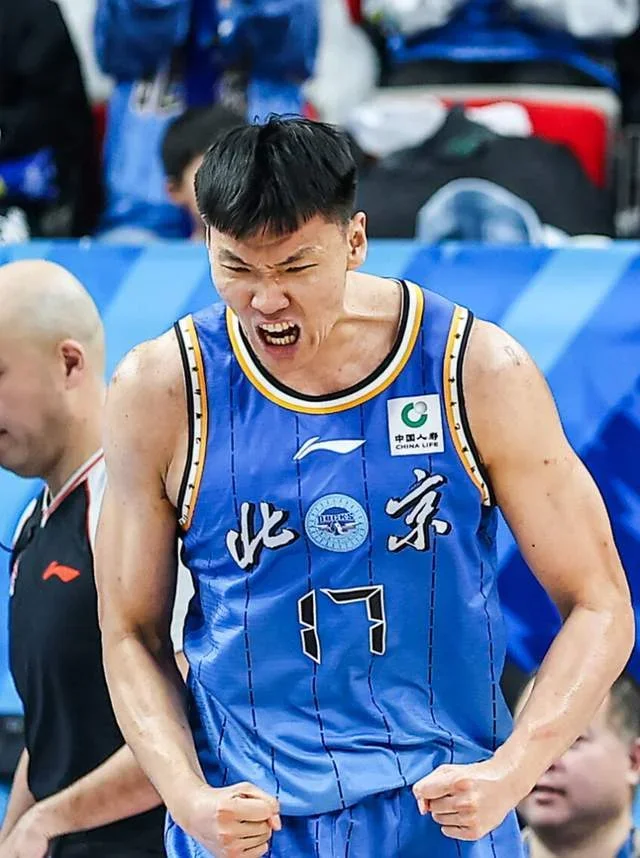
When the Beijing team defeated Guangdong 88-73 at home to advance to the CBA semifinals, a silent controversy over who should be on the court sparked more intrigue than the final score.
Fan Ziming, the center who signed a six-million yuan max contract, was left out of the 12-man roster for three consecutive games. In the decisive match, he didn’t even step onto the bench. He wasn’t injured and had no disciplinary issues—he was simply discarded in this season-defining battle.
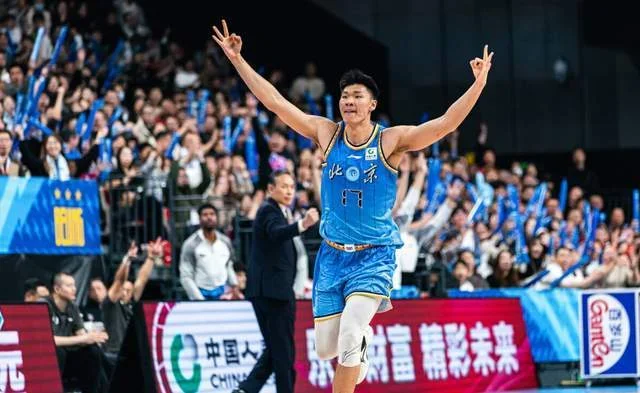
This was no accident. It was head coach Xu Limin’s cold restructuring of the team’s interior rotation. Beijing’s frontcourt is no longer a one-man island. Zhou Qi is the absolute cornerstone, but in Game 2’s fourth quarter and overtime, he nearly single-handedly withstood Guangdong’s waves of attacks, pushing his stamina to the brink. In that moment, it became clear how thin Beijing’s big-man depth really was. Qiu Tian’s return wasn’t a luxury—it was a lifeline. Though not a star, he provides clean screens, aggressive box-outs, and fundamental defensive discipline—exactly what Fan Ziming lacks.
Fan’s skill set has been described as “raw.” He has height and strength, but his footwork is slow and his positioning awareness is fuzzy. Under high-pressure playoff defense, he tends to isolate and struggles to integrate into Beijing’s system-oriented defense and quick ball movement. In the postseason’s high-stakes environment, this immaturity is magnified. Xu Limin once stated bluntly: “Opportunities are not given to anyone—they are earned.” Those words were not an encouragement but a verdict. In Beijing’s interior trio of Zhou Qi, McGee, and Qiu Tian, Fan Ziming has neither found his role nor proven he can be trusted.
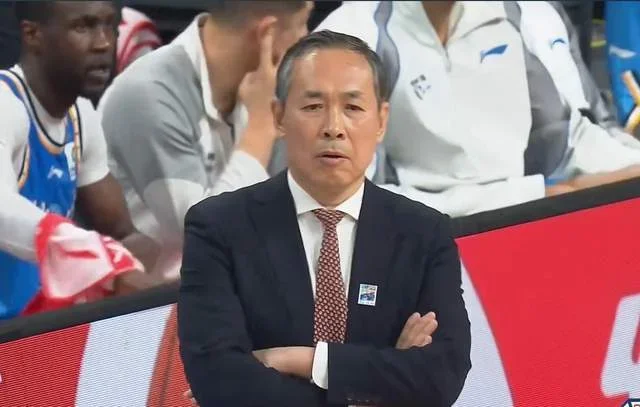
Beijing’s choices go beyond interior decisions. They intentionally reduced frontline redundancy to gain perimeter flexibility and tighter ball distribution. Fang Shuo’s return brought more ball-handling options and drive-and-kick possibilities—exactly what they needed against Guangdong’s deep guard rotation. Even when McGee and Spellman went cold offensively, Beijing still relied on Zhou Qi’s paint dominance and Zhao Rui’s driving playmaking to win, signaling a tactical shift from “single-player interior isolation” to a system-driven approach.
Fan Ziming’s absence is not a personal failure but a rational choice under resource constraints. He isn’t lacking in talent—he’s lacking in fit. Under the CBA salary cap, a max contract is no longer a guarantee—it’s a responsibility. When a player cannot contribute in critical moments, even the highest salary can be shed by the system.
With Guangdong short on big men, Fan Ziming’s future might indeed lie in the south. But for Beijing, they don’t need a “potential star”—they need a “reliable cog.” On the razor’s edge of the playoffs, emotion yields to efficiency, hope yields to results. Fan Ziming’s silence is the truest footnote of this era: on the highest stage of competitive sports, without a position, there is no existence.
